Nederlands
 English
 français
 Deutsch
 italiano
 русский
 español
 português
 العربية
 한국의
한국의 Romania
 Bulgaria
 Melayu

De laatste tijd is er een merkbare toename in de wereldwijde vraag naar WaterstofcompressiemodulesVooral omdat iedereen het nu over schone energieoplossingen heeft. Ik kwam een rapport van MarketsandMarkets tegen dat suggereert dat de markt voor waterstofcompressie in 2025 zo'n XX miljard dollar zou kunnen bereiken, met een behoorlijk gezonde groei van XX%. Dit laat echt zien hoezeer mensen waterstof beginnen te zien als een belangrijke speler in onze energietoekomst.
Dr. Emily Tran, die zonder twijfel tot de topexperts op het gebied van waterstoftechnologie behoort, zei dat 'waterstofcompressiemodules absoluut cruciaal zijn voor het efficiënt opslaan en transporteren van energie'. Ik denk dat dit benadrukt hoe belangrijk geavanceerde compressietechnologie is voor de verdere ontwikkeling van de waterstofeconomie. Grote bedrijven zoals Hydrogenics, Plug Power en Nelson Global Products verleggen de grenzen op dit gebied, maar laten we eerlijk zijn, er zijn nog steeds obstakels – zoals ervoor zorgen dat deze systemen betrouwbaar en betaalbaar zijn.
De hele sector rondom waterstofcompressie verandert razendsnel, maar er blijven vragen bestaan over de schaalbaarheid van deze oplossingen en hun werkelijke efficiëntie. Mensen die in deze sector actief zijn, werken hard aan het oplossen van deze problemen en iedereen wacht op grote doorbraken die onze kijk op hernieuwbare energie volledig op zijn kop kunnen zetten. energie en opslag.
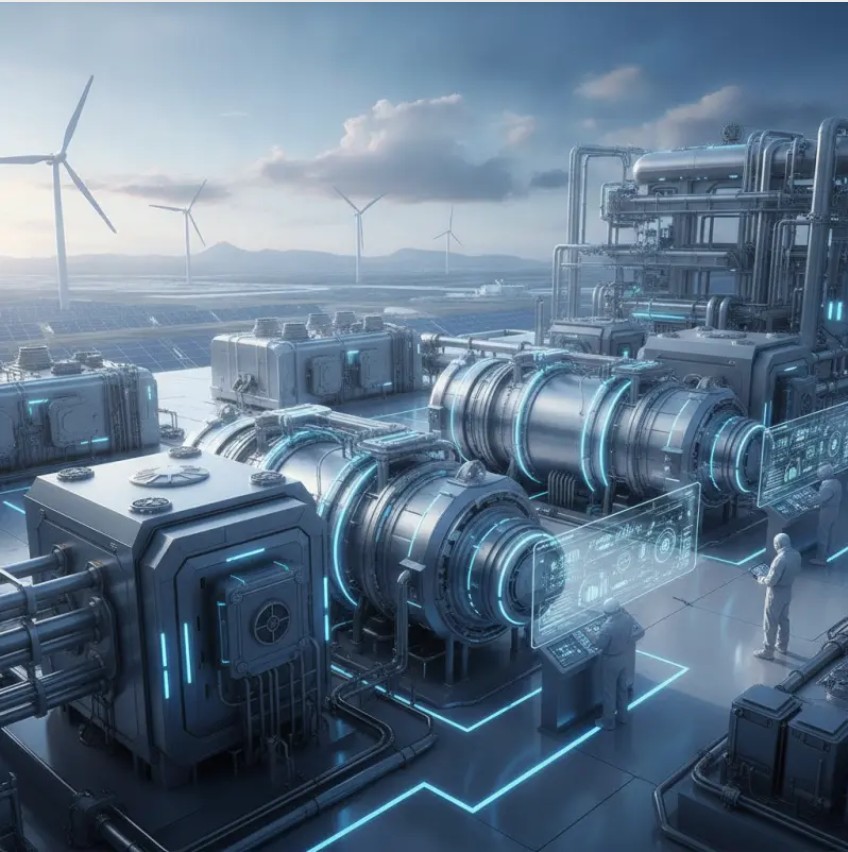
Waterstofcompressiemodules spelen een cruciale rol in de waterstofvoorzieningsketen. Deze modules zorgen voor efficiënt transport en opslag van waterstofgas, wat essentieel is voor diverse toepassingen, waaronder brandstofcelen industriële processen. Volgens brancherapporten zal de wereldwijde waterstofmarkt naar verwachting in 2025 een waarde van 200 miljard dollar bereiken. Deze groei hangt direct samen met de toenemende vraag naar efficiënte waterstofcompressiesystemen.
Het belang van deze modules ligt in hun vermogen om de veiligheid te verhogen en het energieverbruik te verlagen. Efficiënte compressie kan leiden tot aanzienlijke kostenbesparingen. Gegevens tonen aan dat een verbetering van de compressie-efficiëntie met slechts 10% de operationele kosten met bijna 20% kan verlagen. Ondanks de vooruitgang kampen veel systemen nog steeds met inefficiënties en technische uitdagingen. Het bereiken van optimale drukniveaus met een minimaal energieverbruik blijft bijvoorbeeld een complexe opgave.
Bovendien moet de betrouwbaarheid van deze systemen voortdurend worden geëvalueerd. Uit een onderzoek bleek dat ongeveer 15% van de waterstofcompressoren binnen het eerste jaar mechanische storingen vertoont. Deze statistiek benadrukt de noodzaak van voortdurende innovatie en strenge testprotocollen in de sector. Naarmate de markt groeit, is het aanpakken van deze uitdagingen essentieel voor het handhaven van de groei en het versterken van de rol van waterstof als schone energiebron.
Waterstofcompressiemodules zijn cruciaal in de transitie naar schonere energie. Deze modules maken de opslag en het transport van waterstof mogelijk, een belangrijke factor in de vermindering van CO2-uitstoot. Geavanceerde technologieën zijn essentieel voor het optimaliseren van de efficiëntie en het waarborgen van de veiligheid van deze systemen.
Belangrijke technologieën zijn onder andere membraancompressoren en systemen op basis van ionische vloeistoffen. Membraancompressoren bieden een hoge flexibiliteit en vereisen weinig onderhoud. Ze werken efficiënt bij wisselende drukken. Bovendien verbeteren ionische vloeistoffen het condensatieproces, waardoor de energieterugwinning aanzienlijk toeneemt. Rapporten geven aan dat de waterstofproductie tegen 2030 een toename van de compressiecapaciteit tot wel 40% zou kunnen vereisen, wat de dringende behoefte aan innovatie in deze sector aantoont.
Bovendien brengen praktijktoepassingen enkele uitdagingen aan het licht. Zo kunnen energieverliezen tijdens compressie oplopen tot 15-20%. Deze inefficiëntie zet fabrikanten ertoe aan nieuwe ontwerpen en materialen te onderzoeken. Continue verbetering is noodzakelijk om aan de groeiende vraag naar waterstof te voldoen. De industrie moet zich aanpassen en gebruikmaken van data-gestuurde inzichten voor toekomstige verbeteringen om optimale prestaties bij waterstofcompressie te bereiken.
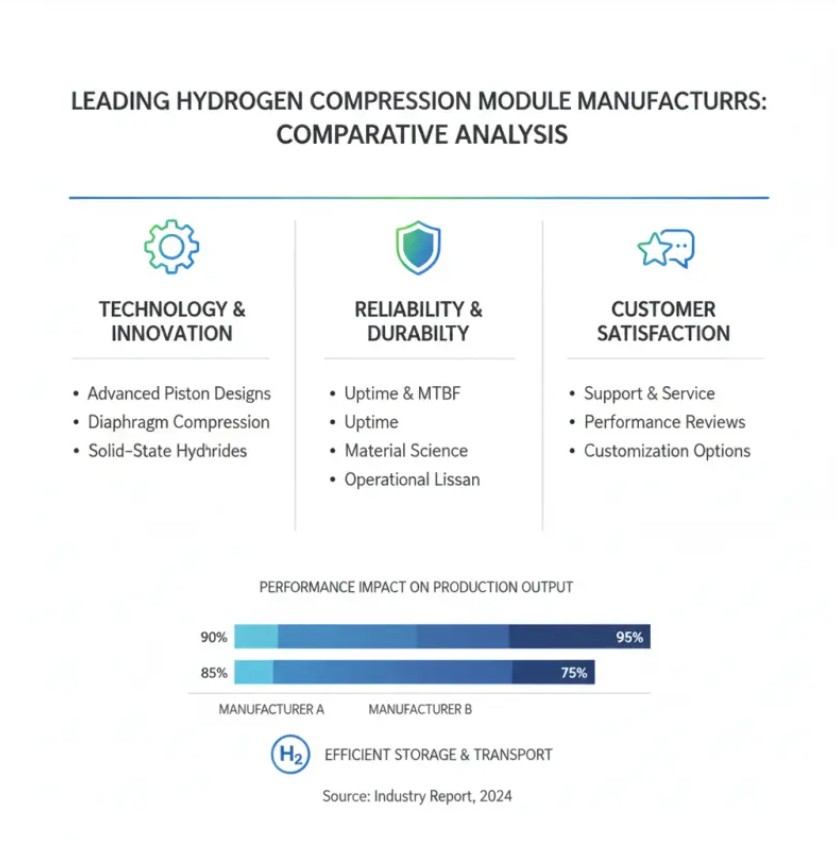
Waterstofcompressiemodules zijn essentieel in diverse industrieën. Ze zorgen voor de veilige en efficiënte opslag en het transport van waterstof. Toonaangevende fabrikanten op dit gebied worden beoordeeld op basis van hun technologie, betrouwbaarheid en feedback van klanten. Prestaties hebben een aanzienlijke invloed op de productieopbrengst.
Belangrijke spelers maken gebruik van geavanceerde materialen en innovatieve ontwerpen. Dit maakt toepassingen onder hoge druk mogelijk met behoud van veiligheidsnormen. Er zijn echter altijd uitdagingen. Sommige fabrikanten worstelen met schaalbaarheid, wat hun marktpositie beïnvloedt. Het vermogen om aan uiteenlopende klantbehoeften te voldoen is cruciaal bij de keuze van de juiste module.
Bovendien beïnvloeden branchevoorschriften de productieprocessen. Naleving hiervan is essentieel voor de operationele betrouwbaarheid. Fabrikanten moeten zich ook snel aanpassen aan technologische ontwikkelingen. Dit voortdurend veranderende landschap vereist continue evaluatie en verbetering. Continu leren is belangrijk om in te spelen op de eisen van de consument en veranderingen in de markt.
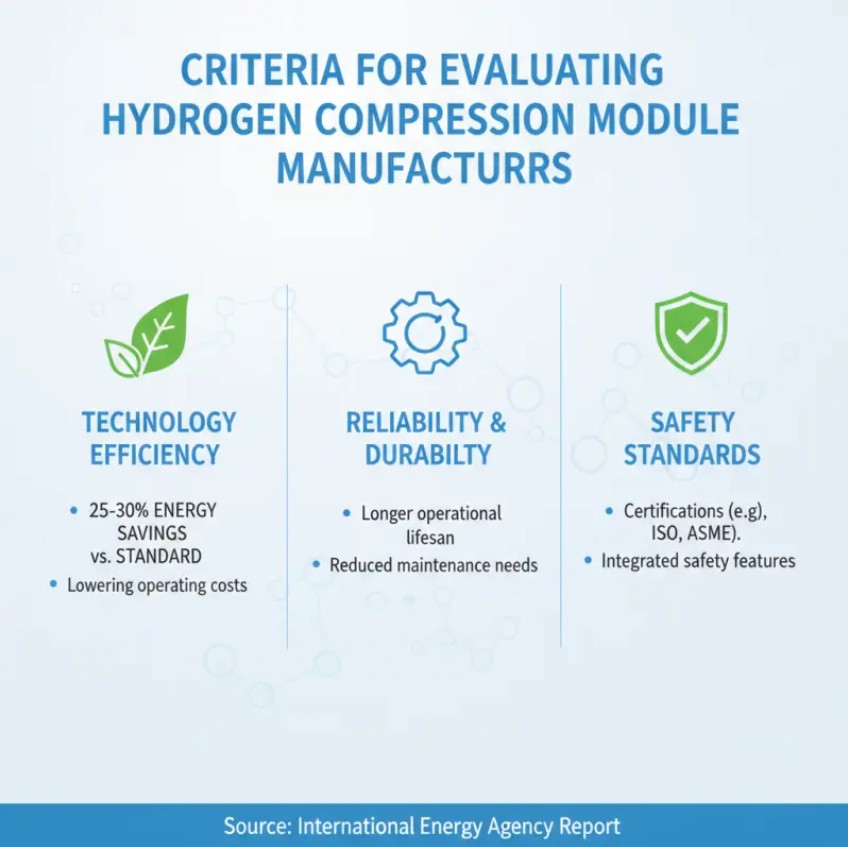
Bij de beoordeling van fabrikanten van waterstofcompressiemodules komen verschillende belangrijke criteria naar voren. De efficiëntie van de technologie speelt een cruciale rol. Een rapport van het Internationaal Energieagentschap (IEA) wees erop dat een optimale compressie-efficiëntie kan leiden tot aanzienlijke energiebesparingen, waardoor de algehele kosteneffectiviteit van waterstofproductie verbetert. Hoogwaardige modules laten doorgaans een energiebesparing van 25-30% zien ten opzichte van standaardmodules.
Een andere belangrijke factor is de betrouwbaarheid van de apparatuur. Fabrikanten met een bewezen staat van dienst in de branche gebruiken vaak geavanceerde materialen die de duurzaamheid verhogen en de onderhoudsbehoefte verminderen. Een recent brancheonderzoek wees uit dat minder dan 10% van de zeer betrouwbare modules gedurende vijf jaar aanzienlijke uitvaltijd ondervond. Dit geeft aan dat kwalitatief hoogwaardige engineering een grote invloed heeft op de levensduur van de prestaties.
Daarnaast zijn veiligheidsnormen cruciaal bij de selectie van een fabrikant. De implementatie van strenge kwaliteitsborgingsmaatregelen kan de risico's die gepaard gaan met waterstofcompressie beperken. Niet alle leveranciers hanteren echter even strenge evaluaties. Rapporten tonen aan dat fabrikanten met ISO-certificering en consistente testprotocollen over het algemeen betrouwbaarder zijn. Dit onderstreept het belang van een grondige screening bij het beoordelen van potentiële partners.
De technologie voor waterstofcompressie ontwikkelt zich snel. Innovaties verbeteren de efficiëntie en duurzaamheid. Nieuwe modules worden ontworpen om het energieverbruik te verlagen en de kosten te drukken. Veel fabrikanten richten zich op het verbeteren van de duurzaamheid en prestaties in veeleisende omgevingen. Deze verschuiving is cruciaal nu industrieën overstappen op milieuvriendelijkere oplossingen.
Recente trends benadrukken de integratie van slimme technologieën. Kunstmatige intelligentie wordt ingezet om processen te optimaliseren. Data-analyse kan de prestaties in realtime monitoren, wat leidt tot proactief onderhoud. Echter, de afhankelijkheid van deze technologieën kan kwetsbaarheden met zich meebrengen. Een systeemstoring kan de bedrijfsvoering aanzienlijk verstoren.
Een andere opkomende trend is modulair ontwerp. Deze aanpak biedt flexibiliteit en schaalbaarheid. Fabrikanten kunnen systemen aanpassen aan de behoeften van de gebruiker. Dit roept echter ook vragen op over compatibiliteit en standaardisatie. Naarmate de markt groeit, wordt het steeds complexer om uniformiteit te bereiken. De innovaties zijn veelbelovend, maar vereisen een zorgvuldige implementatie om betrouwbaarheid te garanderen.
Waterstofcompressiemodules spelen een cruciale rol in de energietransitie. Diverse fabrikanten boeken vooruitgang op dit gebied. Het bestuderen van praktijkvoorbeelden helpt hun succes te illustreren. Deze casestudies tonen innovatieve benaderingen en praktische toepassingen in uiteenlopende omgevingen.
Een opvallend voorbeeld van implementatie was een grote installatie voor hernieuwbare energie. Hun waterstofcompressiesysteem optimaliseerde de output en verlaagde de operationele kosten. Het ontwerp maakte een soepele integratie met de bestaande infrastructuur mogelijk. In de beginfase deden zich uitdagingen voor, maar aanpassingen leidden tot een verbeterde efficiëntie. Deze aanpasbaarheid benadrukt het belang van veerkracht bij de implementatie van technologie.
Een ander voorbeeld betrof een industriële toepassing. Het bedrijf wilde zijn waterstofopslagcapaciteit vergroten. Ze kozen voor een modulair compressiesysteem dat hun processen stroomlijnde. Ze stuitten echter op problemen met de afhankelijkheid van de toeleveringsketen. Een diepere analyse bracht de noodzaak van lokale inkoopstrategieën aan het licht. Dergelijke overwegingen stimuleren continue verbetering van productieprocessen.
Deze voorbeelden tonen de inzet voor vooruitgang in waterstoftechnologie. Ze illustreren hoe strategische implementatie concrete uitdagingen kan oplossen. Elk verhaal biedt waardevolle lessen voor toekomstige projecten in deze zich ontwikkelende markt.
De energiesector is in ontwikkeling en waterstofcompressiemodules spelen hierin een cruciale rol. Deze modules maken de efficiënte opslag en het transport van waterstof mogelijk. Naarmate landen op zoek gaan naar schonere energiebronnen, neemt de vraag naar gecomprimeerde waterstof toe.
De toekomstperspectieven voor waterstofcompressiemodules zien er veelbelovend uit. Experts voorspellen aanzienlijke investeringen op dit gebied. Technologische vooruitgang zou kunnen leiden tot kleinere en efficiëntere modules. Er blijven echter uitdagingen bestaan. Zo is het waarborgen van de veiligheid tijdens opslag een grote zorg. Belanghebbenden in de industrie moeten prioriteit geven aan onderzoek om deze problemen aan te pakken.
Tips: Bij het overwegen van waterstofcompressieoplossingen is het belangrijk om de efficiëntie te evalueren. Houd rekening met de operationele kosten op lange termijn in verhouding tot de initiële investering. Veiligheidscertificeringen zijn essentieel in deze zich ontwikkelende markt. Dit garandeert betrouwbaarheid en naleving van de regelgeving tijdens de bedrijfsvoering. Kwalitatief hoogwaardige modules hebben een aanzienlijke impact op uw energiestrategie.
Waterstofcompressiemodules spelen een cruciale rol in de waterstofvoorzieningsketen door de efficiënte opslag en het transport van waterstof voor diverse toepassingen mogelijk te maken. Deze modules maken gebruik van geavanceerde technologieën, waaronder hogedrukcompressoren en innovatieve koelsystemen, om de prestaties te verbeteren en het energieverbruik te verlagen. Een vergelijkende analyse van toonaangevende fabrikanten laat de verschillende benaderingen en oplossingen zien die in deze snel evoluerende industrie worden aangeboden.
Bij de beoordeling van de beste fabrikanten wordt gekeken naar criteria zoals technologie, efficiëntie, betrouwbaarheid en klantenservice. Recente innovaties leggen de nadruk op duurzaamheid, met trends die zich richten op het verbeteren van de efficiëntie en schaalbaarheid van waterstofcompressieprocessen. Casestudies van succesvolle implementaties onderstrepen de praktische effectiviteit van topfabrikanten en duiden op een veelbelovende toekomst voor waterstofcompressiemodules in de energiesector, nu de vraag naar schone energieoplossingen blijft stijgen.
Wat is waterstofcompressietechnologie?
Het is een methode voor het efficiënt opslaan en transporteren van waterstof.
Waarom is efficiëntie belangrijk bij waterstofcompressie?
Een hogere efficiëntie leidt tot een lager energieverbruik en lagere operationele kosten.
Welke rol speelt kunstmatige intelligentie in deze technologie?
AI optimaliseert processen en maakt realtime prestatiebewaking mogelijk.
Zijn er risico's verbonden aan het gebruik van slimme technologieën?
Ja, systeemstoringen kunnen de bedrijfsvoering verstoren en kwetsbaarheden introduceren.
Wat is modulair ontwerp bij waterstofcompressie?
Het biedt flexibiliteit en schaalbaarheid, waardoor aanpassing aan de behoeften van de gebruiker mogelijk is.
Waarom is standaardisatie een uitdaging op de waterstofmarkt?
Naarmate er meer fabrikanten op de markt komen, wordt het steeds complexer om compatibiliteit te garanderen.
Wat zijn de toekomstperspectieven voor waterstofcompressiemodules?
veelbelovende ontwikkelingen kunnen leiden tot kleinere en efficiëntere modules.
Welke veiligheidsrisico's zijn er verbonden aan de opslag van waterstof?
Het waarborgen van de veiligheid tijdens opslag is cruciaal en vereist voortdurend onderzoek.
Waar moet je op letten bij het kiezen van waterstofoplossingen?
Evalueer de efficiëntiecijfers, de kosten op lange termijn en de essentiële veiligheidscertificeringen.
Welke invloed hebben kwaliteitsmodules op energiestrategieën?
Ze hebben een aanzienlijke invloed op de operationele betrouwbaarheid en de algehele effectiviteit.



 IPv6 NETWERK ONDERSTEUND